


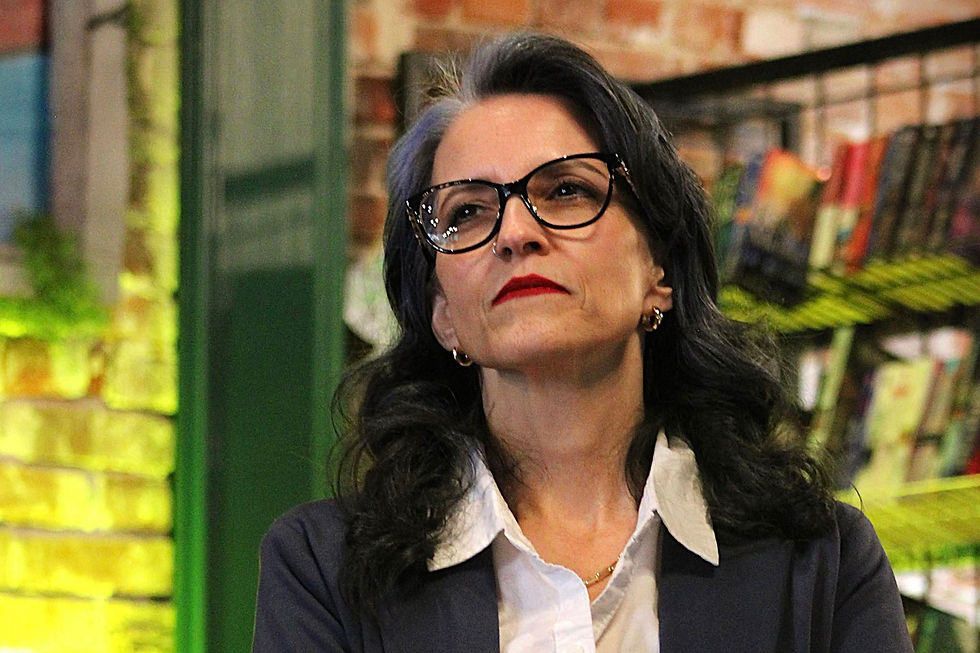
Election 2026 Interview Series: Candidate for State Representative D70 Sarah Blessing

As the 2026 general election approaches, The Washington County Times is publishing written interviews with candidates in contested races affecting Washington County.
The Times reached out to all candidates for whom we were able to obtain contact information and invited them to participate. If you are a candidate in a contested race and have not received an invitation, please contact us so we can make sure you have an opportunity to participate.
Candidates were provided with questions tailored to their campaign, personal history, and the office they are seeking. We encouraged candidates to answer the questions in their own words and to refrain from using ChatGPT or other artificial intelligence tools when preparing their responses.
All candidate responses have been published as submitted, without editing or alteration by The Washington County Times.

Why are you running for State Representative, and what do you believe District 70 needs from its next representative?
I am running for State Representative because I believe regular Hoosiers have lost their voice in state government. We need someone who will truly listen to the people of District 70 and fight for them at the Statehouse. Too many laws are passed with loopholes that help big businesses and wealthy people, while regular families are left paying the price. District 70 needs a representative who will put people first and make sure their voices are heard.

District 70 includes rural communities in Washington, Harrison, and Floyd counties. What do you believe is the biggest challenge facing those communities, and what can state government realistically do to address it?
I believe the biggest challenge is that rural communities have lost their voice. Too often, laws are passed at the Statehouse without enough thought about how they will affect people in small towns and rural areas.
We can start by making bills shorter and keeping them focused on one issue. That makes it easier for lawmakers and the public to understand what is really in a bill. It also makes it harder to hide loopholes that may hurt our communities.
We also need stronger accountability when local government is not doing its job. Taxpayers deserve to know where their money is going and how it is being spent. When local officials fail to properly account for public money, the state should have strong oversight and make sure problems are corrected. Rural Indiana needs people at the Statehouse who will listen, work together, and make sure our communities are not forgotten.

What do you believe Indiana is getting right on taxes, and what would you change?
A lot of our tax dollars do pay for things people need every day. They help pay for our public schools, roads, health care, public safety, and other important services. What I would change is who gets the biggest tax breaks.
I do not think Indiana should give huge tax breaks to data centers, mega companies, or very wealthy people while families in our communities are struggling. I want us to invest more in the people who actually live here. That means supporting public schools, keeping rural hospitals open, helping small businesses, fixing roads and water systems, and helping working Hoosiers. Our tax system should work for the people who live in Indiana, not just the people and companies with enough money to find the biggest tax breaks.
Many residents in Southern Indiana commute to Louisville and other communities for work. What can Indiana do to encourage more quality jobs and economic opportunities to locate within rural communities?
We need to invest in the people and businesses that are already here. One way to do that is to make sure every rural community has fast and reliable internet. Today, many people can work from home. If you have good internet, you can live in a small town and work for a company almost anywhere.
We should also do more to help small businesses and family farms stay open and grow. We can help people get the training they need for good-paying jobs and make it easier for someone to start a business in their own community.
Economic growth does not always have to mean bringing in a huge company. Sometimes the best investment we can make is in the Hoosiers who already live here. We should help them build businesses, keep family farms going, create good jobs, and keep more of our money right here in our communities

What should the state’s education priorities be, and how should Indiana balance educational choice with the needs of traditional public schools?
As a former teacher, this is one of the most important issues to me. I believe public tax dollars should fund strong public schools that are open to every child. Indiana’s voucher program has grown from about $15 million in its first year to nearly $500 million a year today. At the same time, our public schools are struggling to keep up with rising costs. That is a problem, especially in rural Indiana.
Many families in our rural communities do not have several schools to choose from. Their local public school may be the only real choice they have. When that school loses funding, the whole community feels it. Parents should have the right to send their child to a private or religious school. But I do not believe taxpayers should have to pay the tuition. We also need to stop passing more rules for our public schools without listening to the people who actually run them. Teachers, superintendents, parents, and local school boards should have a stronger voice.
I have talked with rural school leaders who are struggling to keep their schools running under the state’s funding system. Our tax dollars should support the public schools that are required to educate every child. I want Indiana to put public education first again.

Rural health care continues to be a concern throughout Southern Indiana. What policies would you support to improve access to doctors, hospitals, mental health care, and other essential services in smaller communities?
We have to protect our rural hospitals. Right now, many rural hospitals are paid less for Medicaid and Medicare patients than it actually costs to care for them. New federal Medicaid changes could also leave more people without health insurance. When people do not have insurance and cannot pay their bill, the hospital still has to provide care. That puts even more pressure on small rural hospitals that are already struggling. I would support changes that protect Medicaid coverage and make sure rural hospitals are paid fairly for the care they provide.
Indiana also needs to invest directly in rural hospitals and help bring more doctors, nurses, and mental-health workers to small communities. We should make healthcare easier to afford so people can get help before they become very sick. If a rural hospital closes, people have to drive farther for emergency care, childbirth, mental-health care, and other services. In an emergency, those extra minutes can matter.
Keeping rural hospitals open is not just about saving a building. It is about saving lives and keeping our communities strong.

What is your position on Indiana’s current abortion laws, and do you believe the Legislature should make any changes to them?
I believe a woman should be in charge of her own health care. Government officials are not doctors, and they should not be making medical decisions for women and their families.
This issue is very personal to me. I have had a miscarriage. I also had a very dangerous triplet pregnancy. One of my children died late in the pregnancy, and I almost died too. I know how quickly a pregnancy can become dangerous.
Doctors in Indiana have warned that our current law can cause doctors to delay care while they try to decide whether a woman is sick enough to meet the law. No woman should have to get closer to death before her doctor is allowed to help her. In those moments, families need doctors, facts, and medical care. They do not need politicians deciding what treatment they can receive. I believe Indiana’s law needs to change. Women’s health care should be based on science, medical facts, and the advice of doctors.
These decisions should be made by a woman, her doctor, and her family — not by the government.

What role should the state play in regulating large-scale developments such as solar projects and data centers? Where should state authority end and local decision-making begin?
The state’s first job should be protecting the people who live here. We should not write laws that mainly benefit large corporations, wealthy investors, or elected officials themselves. Government should serve the people who elected us.
I am especially concerned about data centers. Indiana currently allows qualifying data centers to receive sales-tax exemptions on equipment and electricity that can last for decades. Some very large projects can qualify for exemptions lasting up to 50 years. I do not support giving away that much in tax benefits without strong protections for taxpayers and local communities. Data centers should be heavily regulated. We need to know how much water and electricity they will use, how they will affect our land, and whether regular families could end up paying higher utility bills because of them. Local people should also have a strong voice before these projects are approved.
The same principle should apply to large solar projects. If a community gives up land and hosts a major energy project, the people who live there should receive real benefits from it. The state should set strong rules to protect our water, land, electric grid, and taxpayers. But local communities should have the right to decide what large developments are appropriate for their area.
Economic development should improve the lives of Hoosiers who live here. It should not simply make wealthy companies wealthier.
If elected as a Democrat in a Legislature where Republicans hold the majority, how would you work across party lines to accomplish things for District 70?
I will work with anyone who is willing to help Hoosiers. I will not judge someone just because of the letter beside their name. I will build healthy working relationships with Republicans, Democrats, and anyone else who is willing to sit at the table and solve problems.
I spent 18 years as a fifth-grade teacher. That taught me how to listen, communicate, explain complicated things, and work with people who do not always agree.
I also co-founded Project Next, a media company focused on bringing people together to talk about real problems in our communities. I will bring those same skills to the Statehouse. Sometimes a bill may sound good on paper, but a loophole or small part of it can hurt real people. I want to help lawmakers understand how the decisions we make at the Statehouse actually affect Hoosiers back home. We do not have to agree on everything to work together.
I will sit at the table with anyone who is willing to put people over party and work toward solutions that help the people of District 70.

If elected, what is the single issue you would make your highest priority during your first legislative session?
My highest priority would be giving regular Hoosiers their voice back in state government. One of the first changes I would push for is single-issue bills. Bills should be shorter, easier to understand, and focused on one main issue. Right now, complicated bills can make it difficult for the public to understand exactly what lawmakers are voting on. I want people to be able to read a bill and understand how it could affect their family and their community. That matters because regular Hoosiers are struggling. After inflation, wages have barely moved, while families are dealing with higher costs for things like housing, food, health care, and utilities. I want every bill we pass to answer a simple question: How will this affect the people who actually live here?
Government should not be written around loopholes for wealthy people, large corporations, or politicians. It should work for the people we were elected to serve. My focus will be putting regular Hoosiers back at the center of every decision we make at the Statehouse.


Comments