


Election 2026: Candidate for Washington County Prosecutor Tara Coats Hunt

As the 2026 general election approaches, The Washington County Times is publishing written interviews with candidates in contested races affecting Washington County.
The Times reached out to all candidates for whom we were able to obtain contact information and invited them to participate. If you are a candidate in a contested race and have not received an invitation, please contact us so we can make sure you have an opportunity to participate.
Candidates were provided with questions tailored to their campaign, personal history, and the office they are seeking. We encouraged candidates to answer the questions in their own words and to refrain from using ChatGPT or other artificial intelligence tools when preparing their responses.
All candidate responses have been published as submitted, without editing or alteration. The Washington County Times does not endorse political candidates, and any opinions or statements expressed within the following interview are the candidate's own.
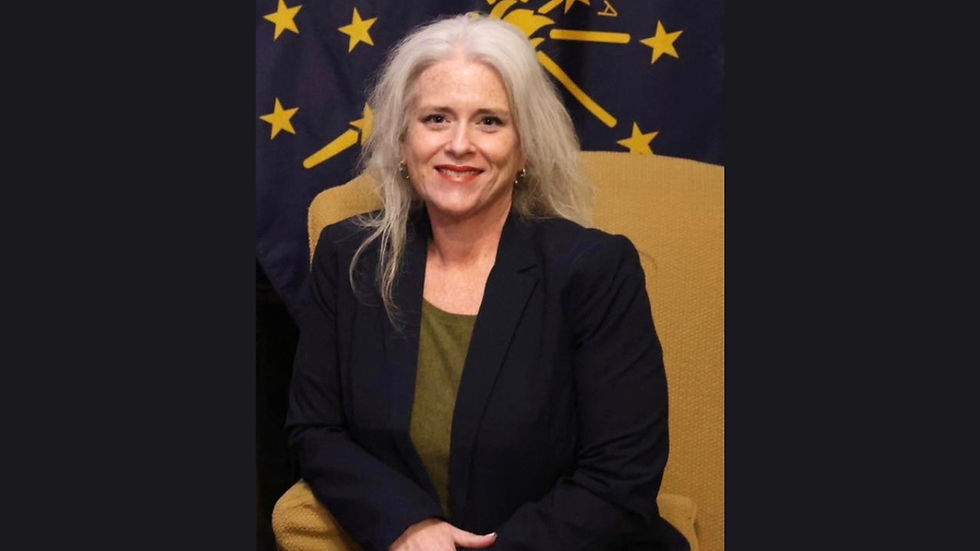
You were first elected as Washington County Prosecutor in 2022. What do you consider your most significant accomplishment during your first term, and what do you believe remains unfinished?
I have been working in the role of a prosecutor since 2017. First as a Deputy Prosecutor and then as Chief Deputy Prosecutor, before being elected by the citizens of Washington County in 2022. Since my official role as elected prosecutor began on January 1, 2023, there are many accomplishments by my office. First, the team that I surround myself with is a great asset for Washington County. I have three dedicated prosecutors who follow my lead in holding criminals accountable. Cumulatively, we have over 100 years of legal experience—primarily in litigation and criminal law. I have a staff of three criminal legal assistants who work diligently to ensure that cases are processed smoothly and efficiently. One of which also serves as our victim advocate. I also have 3 caseworkers who manage the child support division. They meet and exceed all federal and state standards of paternity establishment, child support order establishment and collection of funds. This office is an around-the-clock undertaking. Both my deputy prosecutors and I are available 24 hours a day, 7 days a week, to assist in investigations that occur. I am very proud of my team.
The biggest accomplishment in a criminal investigation is working alongside Indiana State Police, Washington County Sheriff’s Department, the FBI, Department of Homeland Security, US Marshalls, Los Angeles, California District Attorneys Office, Jefferson County, Kentucky Commonwealth Attorneys Office, among others, to bring justice for the little boy found in a suitcase in the woods of rural Washington County. The mere fact that this young child was able to be identified (since he was never listed as a missing child) was a miracle, and the work done by law enforcement to identify and apprehend both his mother, and mother’s friend was the greatest accomplishment by law enforcement. This investigation is true representation of how our wonderful community pulls together in times of need and supports our law enforcement officers. My office was able to prosecute the mother’s friend, Dawn Coleman, ending in a conviction of conspiracy to commit Murder. Her sworn testimony, as a result of her plea agreement, and 30 year sentence to the Indiana Department of Correction, with 5 years suspended to probation, is an important part of the continuing prosecution of the child’s mother, Dejaune Anderson. As much as I wanted to see the prosecution of the child’s mother here in Washington County to completion, I had to make a legal decision to ensure that justice would be served, by sending the case to the jurisdiction of Jefferson County, Kentucky. I continue to support the Jefferson County Commonwealth Attorneys Office as they prosecute her to the fullest extent of the law.
I am also proud of the work done by my team, especially my Chief Deputy Prosecutor, who manages the prosecution of sex crimes in our county. We have worked closely to support law enforcement agencies in their investigations of sex crimes. We have increased both the number of sex crime case convictions (both adult and child victims) and the number of years incarcerated. These cases are some of the most difficult and challenging cases to prosecute, with many factors contributing to the outcomes. However, we work closely with the victims and do what we can under the law to hold those who violate victims in the most personal ways accountable.
Lastly, I have made it a priority to develop a close, working relationship with all three of our community school corporations. The future of our community is with our children. Teachers and administrators are on the front line of supporting the youth in their care. On most days, this goes beyond the classroom into issues a child may be facing at home. I have worked with school administrations and school resource officers on issues of truancy, controlled substances brought into the school and holding children accountable for criminal acts on school grounds. Our schools should be a safe place for children to learn and grow into successful young adults.

Since you took office, Washington County has seen a significant decline in the number of criminal cases filed each year. What is your interpretation of that trend, and what factors do you believe have contributed to the decrease?
Case filings are always in flux. As with any data, it depends on the narrator to complete the story. I would respectfully disagree that there is a significant decline in cases; however, this can be explained in two ways.
First, case filings go down when crime goes down. That is a pretty sensical viewpoint on case filings. If officers aren’t responding to crimes, there are less reports to submit to my office for review, and thus, less filings. I would agree that criminals, especially drug dealers, large organized theft organizations, etc., do not want to “do business” in Washington County. They know that they will be investigated, arrested and prosecuted on terms unlike surrounding counties. They will be held on full-cash bail, they will do significant time in the Indiana Department of Corrections, and for those who violated any probationary period, they will serve that time incarcerated as well. Local city, county and state officers are also consistently patrolling our roads and communities. Their commitment to the safety of Washington County also deters people from committing criminal acts.
Second, a factor that can affect the number of criminal filings is the number of officers conducting investigations and submitting reports. Over the past few years, our local law enforcement agencies have struggled with the state/national trend of less individuals choosing law enforcement as a career. With surrounding counties and the state offering competitive benefit packages for officers, it has been an unfortunate trend for many rural law enforcement agencies to lose officers to other agencies who are able to offer better benefits. I have always supported our law enforcement agencies in their need for necessary equipment and voiced my support on a salary increase to keep our agencies competitive in southern Indiana. When agencies are not fully staffed, it is only rational that the number of investigations and subsequent reports making it to my office decline. I will continue to work with our local law enforcement agencies to provide support and training for those officers who choose to keep Washington County safe.

Washington County continues to see a significant number of drug-related arrests. What do you believe is the most effective way to address the county's drug problem, and where do you believe prosecution fits into the larger picture of prevention and treatment?
Drug-related arrests are a continuing problem across the entire country. However, we must continue to hold people accountable who continue to break the law. A Prosecutor’s role is not the same as a probation officer, a therapist, or a social worker. While everyone has an important role to play in combatting the drug problem, my role is accountability. My role is to pursue criminal charges for those that choose to commit crimes—no matter what the crime or level of offense. I do not want to see communities fall into the trap of drug crimes are victimless, they shouldn’t be prosecuted, they should go straight to treatment. This pattern does not work. We only have to take a look at other states to see how progressive prosecutors’ choices to not criminalize drug possession, does not work. You can look at cities such as Boston, Los Angelas, Portland, Seattle, Chicago, and even Indianapolis, to see how ignoring some, if not all, drug crimes turn their city streets into a
third-world country. Officers must stand by and watch as individuals get high in public parks, near playgrounds, and pass out on street corners. There is no accountability and the rule-following citizens are the ones who pay the ultimate price.
Drug crimes are not victimless. Drug use results in increased traffic accidents, thefts, domestic batteries and neglect of dependents. The increased traffic accidents increase insurance premiums, theft (no matter how small) are passed down by businesses to the consumer. Children of parents who are using or dealing within the home are at an increased rate of neglect and sexual abuse.
Unfortunately, the drug cases may increase on paper, but you also must consider what the crime rate would be if you ignored the drug cases and didn’t prosecute. The number of all other crimes would increase dramatically, and our small towns would not look the same.
A continued goal for my next term is to educate the public. Educating the parents as to the new drugs that are being introduced to their children. Educating the school administration and teachers as to what the latest trends are. The legalization of marijuana is the most misunderstood problem across our country. The THC in vapes, edibles, or other commercially marketed products are not insignificant. The actual marijuana plants cultivated today are not the plants many people associate with marijuana from 50 years ago. TCH is a psychedelic drug. It has the same effects as LSD. The THC % in plants from 50 years ago was approximately 3-5%--today it’s upwards of 25-30%. The THC found in vaping liquid, gummies, drinks, etc. are upward of 80%. The studies that have been done since legalization took place in Colorado and Canada are astounding. The effect on developing brains of children who use the current THC products (even occasionally) have a significant change of developing a psychiatric disorder. The most alarming statistic from studies shows an increased suicide rate in youth and young adults who use. This is because the high concentrate TCH affects the mood receptors of the brain.
I will continue to prosecute drug cases, all drug cases, for as long as they are held to be illegal in Indiana. I will continue to entertain conversations with families who reach out and ask for me to keep their loved one incarcerated. Why would they ask this? Because they know their family member is safe in jail. It takes away the worry of where the person is and if they are going to receive the phone call of an overdose. I also have crafted plea agreements that place additional terms of treatment, to give the defendant an extra layer of accountability and focus on remaining drug free.
Most of the defendants prosecuted by my office are Washington County residents. I must hold these individuals accountable, but I also understand that they will be returning to our community after the completion of their sentence if incarcerated or while out on probation. I want the person to be successful. I do not want to see them repeat their behavior. However, that is a choice they must make on their own—not as a condition set upon them by the court system. I support programs that work with defendants who have substance abuse issues. There is a need for organizations to help guide defendants down the path of recovery. My responsibility is to keep our communities and citizens safe and for some, that may be jail.


How do you determine when a criminal case should be pursued aggressively, when a plea agreement is appropriate, and when charges should be reduced or dismissed?
Prosecutors, by law, are considered “ministers of justice”. We are bound to maintain the highest level of integrity and ensure that the criminal case is fair and just for everyone involved, including the defendant.
There are many factors that a Prosecutor takes into consideration when determining if a case can be filed, what the charges should be? what does the evidence support? Is this a first-time or repeat offender? Did the crime result in injury or death? What does the law allow for a sentence? Can I get a just and appropriate plea that fits the crime without a trial? Does a trial need to occur? What is the victim’s position? Has any evidence changed? Did the weight of the drugs come back heavier or lighter than estimated? Has the defendant made significant efforts to rehabilitate himself/herself? Are they a Veteran? Are they appropriate for Veteran’s Court?
I review each report with these same types of questions. If it appears a case cannot be proved beyond a reasonable doubt, then it may not get filed. If a weight of a drug comes back low from the lab the level of felony that can be pursued will change.
There is not a one-size-fits-all approach to the criminal justice system. I take this role very seriously and make decisions on what I believe is in the interest of justice for each particular case.

Victims can sometimes feel that the criminal justice system is focused more on the defendant than on them. What does your office do to keep victims informed and involved throughout the prosecution of a case?
My office takes an active role ensuring that each victim is informed and involved from the onset of each case. The victim advocate reaches out to every victim requesting that he/she complete a victim statement with their wishes on issues concerning the resolution of a case to whether he/she is requesting restitution. Each victim is also provided with a copy of the victim’s bill of rights set forth by the legislature. Victims maintain a direct line of communication with our victim advocate. Victims meet with the prosecutor(s) handling the case at various points throughout a case, including preparation for a hearing and trial. They are apprised of court dates throughout the pendency of the case.
When a case includes charges of a crime against a person (i.e. battery, neglect, intimidation, etc.), my office files a criminal no contact order pursuant to statute, that protects a victim from contact with the defendant. Victims are informed that a no contact order exists. This is a decision that is done for the victim(s) best interest in preventing any future situations where harm to the victim could result. It is the policy of my office not to dismiss a no contact order prior to the resolution of the case. It is my office’s role to protect a victim, and any changes to that during the pendency of a case must come from a Judge after a hearing is held.
While there are victim’s rights set forth by the legislature, the ultimate decision on the resolution of a case lies with my office. Again, difficult decisions are made by my office every day and the victim’s situation and position are important factors taken into consideration.

What do you believe is the appropriate balance between working closely with local law enforcement and maintaining the independent judgment of the prosecutor's office when deciding whether and how to pursue charges?
A prosecutor is considered the chief law enforcement officer of the county. Developing and maintaining a relationship with city, county, state and federal law enforcement is important in the development of strong investigations. I maintain that relationship so that officers know that they can reach out to any of the prosecutors in my office and any time day or night if they need assistance with legal standards or procedures.
That rapport does not equate to my office directing an officer on how to investigate or who to arrest. Those decisions solely fall upon the officer. We are there to ensure that they understand what law applies to a particular situation—then they can make an informed decision.
There are many layers of discretion in a criminal case. A law enforcement agency has its own internal policies and discretion on whether an issue is criminal in nature, whether to arrest someone outright or just file a report with my office. My office is then responsible for reviewing the reports submitted by an officer to determine if there is probable cause to support the arrest, or to support an arrest warrant being issued, or perhaps issue a Summons. The final layer of discretion lies with a jury or with the court as the fact finder in a bench trial or sentencing decisions.
The ability to review the evidence presented by an officer’s investigation and apply it to the criminal laws is independent review that I make on each report—entirely separate from my working relationships with the officers.
Washington County has a relatively small prosecutor's office handling everything from routine misdemeanor cases to serious felony offenses. Are the office's current staffing and resources adequate? If not, what additional resources are needed?
Our office is comprised of myself, 2 full-time deputy prosecutors and 1 part-time deputy prosecutor; 3 criminal legal assistants and 3 child support caseworkers. We review all criminal police reports and file cases comprised of Class A, B, and C misdemeanors and Level 1-6 felonies and Murder. We see each case through to completion. All modification requests, expungement requests, and Petitions for Post-Conviction Relief are handled by my office. We also are responsible for all infractions filed for traffic violations as well as infractions from the Indiana Department of Natural Resources. My office also manages the Child Support IV-D Division for the State of Indiana.
Unlike defense counsel whose involvement doesn’t start until the initial hearing; prosecutors are involved from the onset of an investigation. Including assistance with search warrant review, attendance at homicide scenes and autopsies. There can be countless hours spent by a prosecutor’s office during an investigation before a report makes it to our desk for review on charges.
Unlike the Indiana Public Defender Council that has stringent requirements for caseload numbers allowed per attorney, the prosecutors have no such written rules. However, the Indiana Prosecuting Attorneys Council has in recent years compiled data from each judicial circuit across the state to determine if there is a need for more Prosecutors and more staff. Utilizing the same criteria as the Public Defenders Council, it has been determined that there is a massive shortage of prosecuting attorneys across the state given the caseloads. In the 42nd Judicial Circuit (which is comprised of Washington County) it has been determined we are short one full-time attorney and a half a staff member.
My office is not afraid of hard work, and the cumulative legal experience of over 100 years between the prosecutors has helped to maintain the current caseload without the expense of an additional prosecutor or staff. However, at some point in the future, this may be a discussion that I will need to address with Washington County Commissioners and Council.
If re-elected, what is the single biggest change or priority you want to pursue during your second term?
My biggest priority is to continue to support and train officers in the investigation of sex crimes and child abuse cases. These are some of the most difficult cases to pursue; however, the victims cannot be forgotten. My Chief Deputy is dedicated in pursuing defendants who offend in the most heinous ways against victims in our community. Obtaining convictions on sex crimes and child neglect, pursuing no contact orders, and ensuring mandatory sex offender registration are all tools in obtaining justice for victims. We will continue to make this a priority.
I will also continue to ensure that drug dealers do not find Washington County a great place to do business. I will pursue convictions placing dealers in the Indiana Department of Corrections for many years as they are damaging our communities and ruining families. Since I began working as a deputy prosector handling drug cases in March of 2017, there have been over 70 drug dealers convicted and serving time in the Indiana Department of Corrections. Just in the past 7 months, 5 drug dealers were convicted, sentenced to a combined 95 years in IDOC. Dealers don’t want to do business in Washington County, and I plan on keeping it that way.


Comments